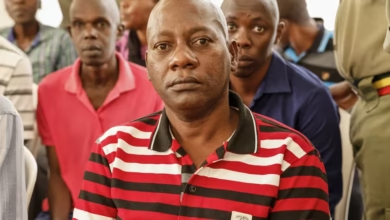

Kenya has confirmed its first-ever case of Ebola after a Kenyan national who had lived in the Democratic Republic of Congo (DRC) for seven years tested positive for the virus and later died in Nairobi.
Health Minister Aden Duale said the patient had become ill about a month earlier and received treatment at several health facilities in the DRC before travelling to Kenya.
According to the minister, the patient arrived in Nairobi on Saturday after travelling by road from the DRC to Kampala, Uganda, where he boarded a flight to Kenya. He underwent routine health screening at Nairobi’s main airport before being taken to a hospital by a relative.
He was initially admitted to Nairobi Hospital before being transferred to an isolation facility established during the COVID-19 pandemic.
The patient later developed symptoms including fever, chills, severe fatigue and weakness, painful swallowing, muscle pain and bleeding beneath the skin. Medical professionals suspected a viral haemorrhagic fever based on his symptoms and travel history.
Laboratory tests subsequently confirmed that he had contracted the Bundibugyo strain of Ebola.
The patient died at 23:30 local time on Monday and was buried the following day under public health safety procedures, with the Kenyan Red Cross Society overseeing the burial.
Kenyan health authorities have identified at least 28 contacts, including relatives and healthcare workers, while efforts are continuing to trace another 23 passengers and four crew members who were on the same flight as the patient.
A senior health ministry official said the patient may have passed through airport screening because medication he was taking could have concealed some of his symptoms.
Following the confirmation, Kenya has intensified disease surveillance at airports, border crossings and other points of entry.
Health Minister Duale has urged the public to remain calm, assuring citizens that measures are in place to prevent further transmission. He also called on health workers to maintain strict infection prevention and control procedures when treating patients.
The case is linked to a wider Ebola outbreak in the DRC, which has recorded thousands of infections and deaths. The World Health Organization has reported 8,544 cases and 4,114 deaths in the current outbreak, making it the largest Ebola outbreak recorded in the DRC.
The outbreak is being driven by the Bundibugyo species of Ebola, a relatively uncommon strain for which there is currently no approved vaccine or treatment. However, several vaccines are under development, with human trials for one candidate beginning in July.
The DRC declared its latest Ebola outbreak in May. Uganda also recorded cases shortly afterwards, including two deaths, but the WHO declared Uganda free of the disease in August. Since then, all known cases have been reported in the DRC until Kenya confirmed its first case.
Ebola is highly infectious and can spread through direct contact with the bodily fluids of an infected person, including blood and vomit.
The situation has been particularly difficult to control in eastern DRC, where prolonged conflict, displacement and weak healthcare infrastructure have complicated efforts to monitor and contain the virus.
Médecins Sans Frontières has warned that the actual number of cases and deaths could be higher because of gaps in surveillance and testing.
The organisation also reported that transmission has intensified in North Kivu, a province bordering Ituri, where the outbreak began, with the area accounting for a significant share of newly confirmed cases.
Kenyan authorities are continuing contact tracing and surveillance efforts as they work to prevent the virus from spreading further within the country.
mfnewsgh.com